





The global Personal Protective Equipment (PPE) industry stands at a pivotal crossroads. Following the seismic disruptions of the early 2020s, the sector has transitioned from a state of reactive crisis management to a new era of strategic resilience and technological sophistication. Hand protection, representing a massive share of the industrial PPE market, is at the forefront of this evolution. No longer viewed merely as a consumable commodity, the modern work glove is now a focal point for discussions regarding supply chain security, raw material economics, advanced manufacturing automation, and international regulatory harmonization. For stakeholders across the value chain—from polymer chemists and OEM manufacturers to safety directors and procurement officers—understanding these macro-trends is essential for navigating the next decade. This comprehensive industry report provides a deep-dive analysis of the current state and future trajectory of the global hand protection market. We will explore the shifting geopolitics of manufacturing, the economic forces driving material costs, the impact of Industry 4.0 on production quality, and the strategic imperatives for businesses seeking to secure their supply chains in an unpredictable world.
Section 1: The New Paradigm of Supply Chain Resilience
The historical model of PPE procurement was largely driven by “Just-in-Time” (JIT) principles, prioritizing lean inventory and the lowest possible unit cost. However, recent global events have exposed the fragility of this approach, catalyzing a shift toward a “Just-in-Case” strategy that values reliability, diversification, and direct manufacturer relationships.
From Transactional to Strategic Partnerships
In the past, many Western distributors relied on a fragmented network of traders and aggregators to source their gloves. This added layers of opacity and cost. Today, the trend is decisively moving towards consolidating spend with vertically integrated Original Equipment Manufacturers (OEMs). Partnering directly with a manufacturer like Shandong Rilong, which controls its own knitting, dipping, and quality assurance processes, provides a buffer against volatility. Direct access to the factory floor ensures transparency regarding capacity, lead times, and raw material allocation, allowing businesses to forecast and plan with greater accuracy.
Regional Manufacturing Hubs and Logistics
While manufacturing is expanding globally, China remains the undisputed heavyweight in the production of coated industrial gloves. The concentration of petrochemical supply chains (for nitrile and PU), advanced textile engineering, and skilled labor creates an ecosystem that is difficult to replicate elsewhere. However, the modern supply chain is becoming smarter. We are seeing the integration of advanced logistics tracking, allowing buyers to monitor their shipments of wholesale industrial protective gloves in real-time, from the dipping line to the container port, mitigating the risks of transit delays.
Section 2: Material Economics: Navigating Price Volatility
The price of a finished glove is inextricably linked to the commodities market. Understanding the economics of raw materials is crucial for procurement teams attempting to hedge against price fluctuations.
The Nitrile Economy
Nitrile Butadiene Rubber (NBR) is a petrochemical product. Its price is correlated with the global price of crude oil and, more specifically, the availability of butadiene monomer. When the automotive or tire industries surge, demand for butadiene spikes, driving up costs for glove manufacturers. Furthermore, the shift away from latex in medical sectors has created sustained high demand for NBR. Smart procurement strategies involve locking in contracts or understanding these market cycles to buy nitrile work gloves at optimal times.
The Natural Rubber Latex Market
Natural rubber latex is an agricultural commodity, subject to the whims of weather, disease, and labor availability in Southeast Asia. A bad monsoon season can disrupt tapping, causing immediate price spikes. However, latex remains indispensable for certain applications. Its unrivaled elasticity and cost-effectiveness for heavy-duty applications, such as latex coated construction gloves, ensure it retains a significant market share despite the growth of synthetics.
The Rise of Engineered Yarns
The cost structure of cut-resistant gloves is driven by the price of High-Performance Polyethylene (HPPE) and para-aramid fibers. As demand for higher cut levels (ANSI A4-A9) grows in industries like automotive and glass, the production capacity for these specialized fibers has become a critical bottleneck. Manufacturers investing in their own yarn-wrapping and knitting capabilities are better positioned to control costs for products like HPPE material cut-resistant gloves.
Section 3: Industry 4.0 and the Automation of Hand Protection
The image of a dusty factory floor is outdated. The leading edge of glove manufacturing is defined by automation, data analytics, and precision engineering—collectively known as Industry 4.0.
Automated Knitting Technology
The foundation of the modern glove is the seamless liner. New generations of knitting machines are capable of producing ultra-fine gauge liners (18-gauge and 21-gauge) that offer bare-hand dexterity. These machines are fully computerized, allowing for instant pattern changes and defect detection. This technology enables the mass production of complex designs, such as gloves with reinforced thumb crotches or variable stitch densities, without the variance introduced by human error.
Robotics in Dipping and Finishing
The dipping process—where the liner meets the polymer—is now a masterpiece of robotic control. Automated arms manipulate the hand formers with precise angles and speeds to ensure a perfectly even coating thickness.
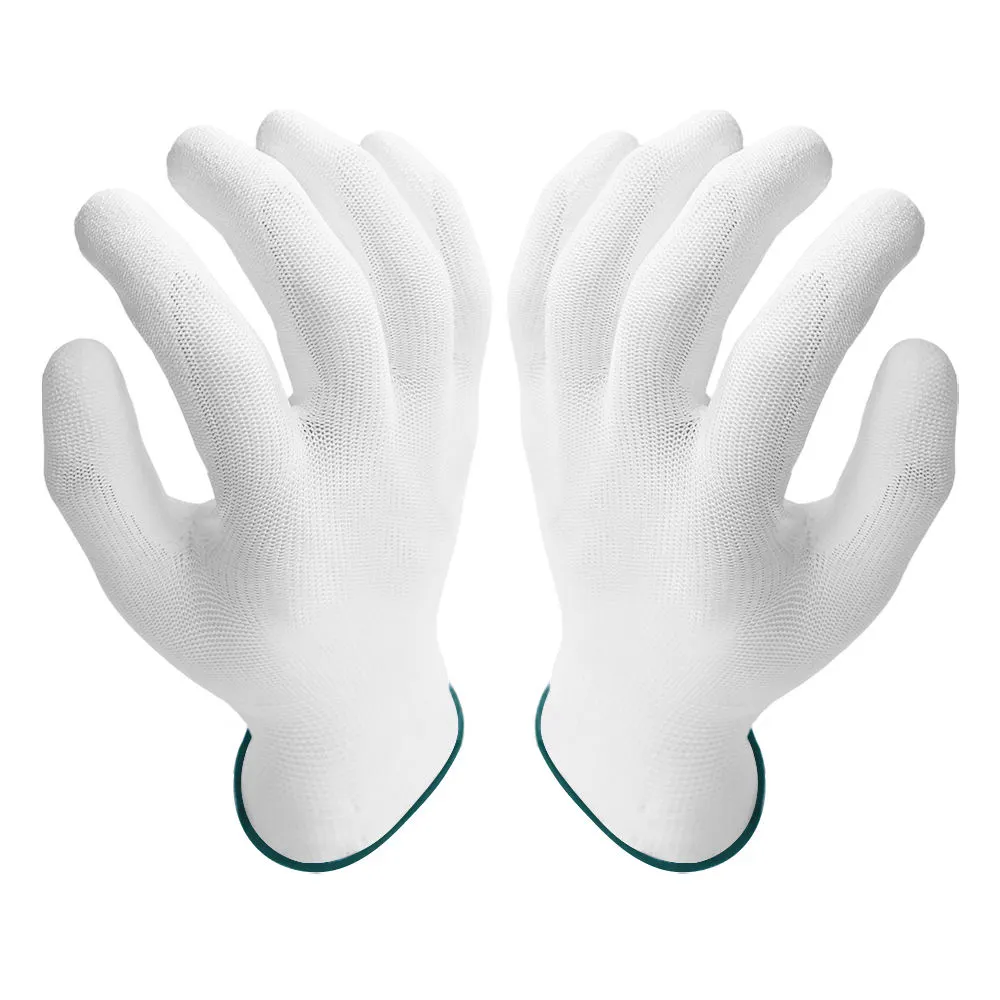
- Consistency: Automation ensures that every PU coated work glove in a batch of 10,000 has the exact same breathability and grip profile.
- Sustainability: Precision dipping reduces polymer waste and optimizes the use of water and energy in the leaching and curing ovens.
AI in Quality Control
Artificial Intelligence is beginning to play a role in Quality Assurance. Vision systems equipped with high-resolution cameras can scan gloves moving along the production line at high speeds, identifying microscopic pinholes, coating runs, or knitting defects that the human eye might miss. This ensures that the industrial gloves reaching the customer meet the highest Acceptable Quality Limit (AQL) standards.
Section 4: The Changing Face of the Workforce and Ergonomics
Demographic shifts and the changing nature of industrial work are influencing glove design and demand. The workforce is aging, becoming more diverse, and facing new types of tasks.
The Aging Workforce and MSDs
As the average age of the industrial worker increases, so does the susceptibility to Musculoskeletal Disorders (MSDs) like arthritis and carpal tunnel syndrome. This drives demand for ergonomic gloves that require less grip force. Innovations like “soft nitrile” and micro-foam coatings are no longer just premium features; they are essential accommodations for an aging labor pool to maintain productivity and reduce injury claims.
Diversity and Sizing Inclusion
The industrial workforce is no longer predominantly male. Women are increasingly entering trades in construction, manufacturing, and logistics. This has exposed the inadequacy of the “shrink it and pink it” approach to PPE. The market is demanding true women’s safety gear—gloves patterned specifically for the female hand anatomy (narrower palms, shorter fingers)—to ensure safety and compliance.
The Gig Economy and General Logistics
The explosion of e-commerce has created a massive logistics and warehousing sector. These workers do not need heavy-duty cut protection; they need lightweight, high-dexterity gloves for scanning, packing, and driving. This has led to a surge in demand for affordable, durable PU and nitrile palm coated gloves that offer grip and touchscreen compatibility.
Section 5: Regulatory Evolution and Global Harmonization
Safety standards are living documents, constantly evolving to reflect new materials and risk profiles. Staying ahead of these regulations is a key challenge for global manufacturers and distributors.
The Impact of EN 388:2016 and ANSI/ISEA 105-2016
The harmonization of cut-resistance testing (the TDM-100 test) between Europe (EN) and North America (ANSI) has been a significant step forward. It provides a unified language for safety. However, regional differences remain.
- Impact Protection: The introduction of ANSI/ISEA 138 has revolutionized the impact glove market, forcing manufacturers to provide quantifiable data on energy dissipation rather than just adding rubber pads for aesthetics.
- Chemical Safety: Updates to EN ISO 374 have tightened the requirements for chemical permeation testing, requiring manufacturers to provide more granular data on breakthrough times for specific chemicals.
Sustainability Regulations (ESG)
A new regulatory frontier is environmental impact. The EU and other regions are considering “Digital Product Passports” that would require transparency regarding the carbon footprint and recyclability of PPE. This will favor manufacturers who have already invested in sustainable practices, such as water recycling and solar energy, and products like eco-friendly latex gloves.
Section 6: Strategic Sourcing for the Next Decade
Given these complex dynamics, how should businesses approach the sourcing of hand protection in the coming years? The answer lies in data, diversification, and partnership.
1. Consolidate to Innovate
Instead of buying from ten different vendors, consolidate spend with a key manufacturing partner. This leverage allows for collaboration on custom product development (ODM). You can work with the factory to design a glove that combines the specific cut resistance, grip, and branding your company needs, rather than settling for off-the-shelf options.
2. Focus on Multi-Hazard Protection
Efficiency drives the trend toward multi-hazard gloves. Why issue a worker a cut glove and an impact glove? Sourcing a single glove that offers ANSI A5 cut resistance, Level 2 impact protection, and a liquid-proof nitrile coating simplifies inventory management and ensures compliance. Products like multi-functional safety gloves are the future of efficient procurement.
3. Demand Transparency
In a world of greenwashing and counterfeit certificates, due diligence is paramount. Audit your suppliers. Request recent test reports from accredited labs. Visit the factory (or conduct virtual tours) to verify their capabilities and ethical labor practices. A transparent manufacturer will welcome this scrutiny.
Conclusion: The Strategic Imperative
The hand protection industry has matured into a sophisticated, high-tech sector that is integral to the functioning of the modern economy. The days of treating gloves as a low-priority consumable are over. Today, the selection of the right glove involves balancing complex variables: polymer science, supply chain logistics, regulatory compliance, and ergonomic health. By understanding the trends outlined in this report—from the volatility of raw materials to the precision of automated manufacturing—businesses can transform their safety programs. Partnering with a specialized, forward-thinking manufacturer is no longer just a purchasing decision; it is a strategic imperative that builds resilience, protects the workforce, and secures the bottom line for the future.
